
About Us
JP Electrical & Controls has emerged as one of India’s leading cable tray manufacturers, with a strong presence in Delhi NCR and across the country.
JP Electrical & Controls has emerged as one of India’s leading cable tray manufacturers, with a strong presence in Delhi NCR and across the country.
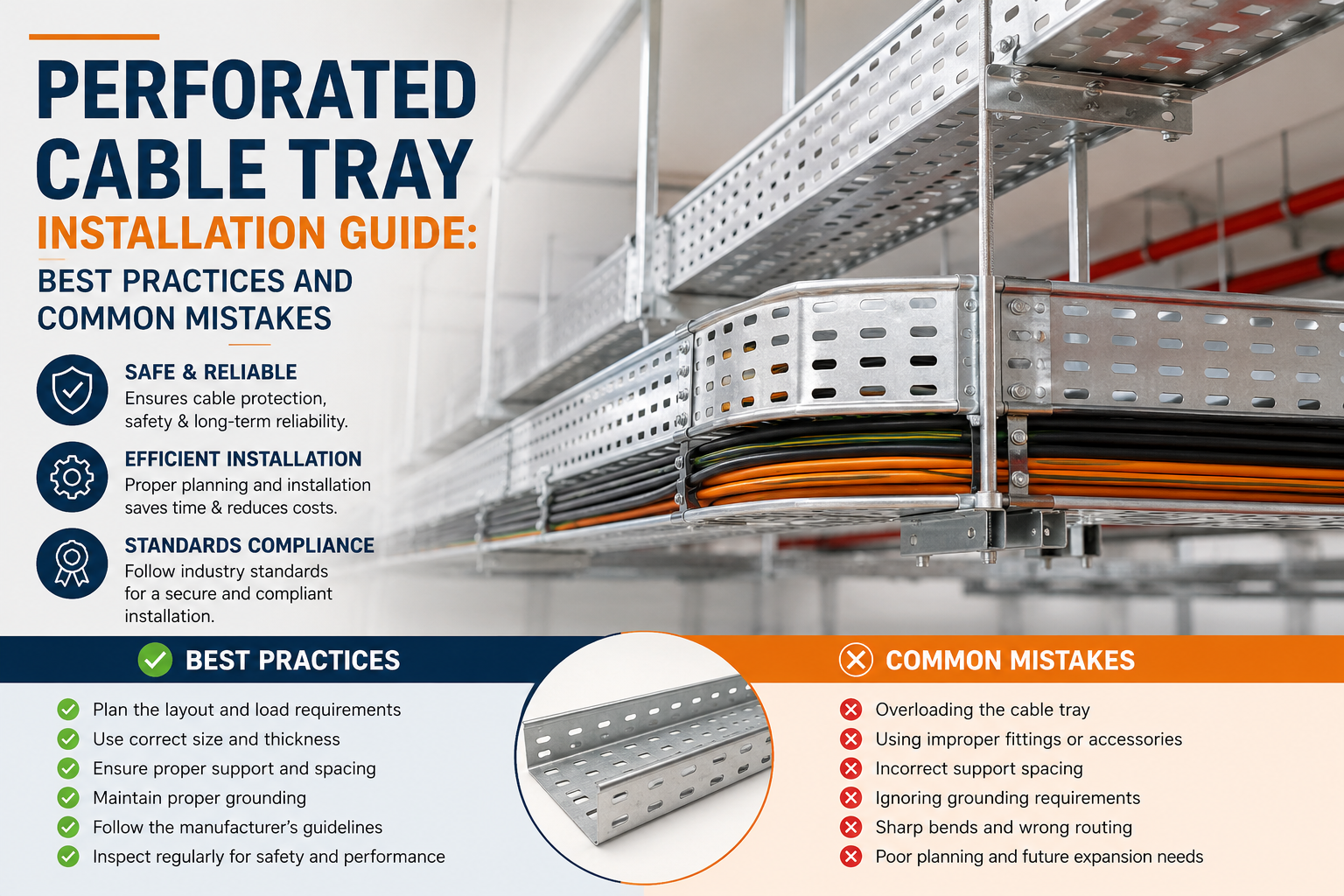
Proper cable management is essential for safe, organized, and efficient electrical installations. A Perforated Cable Tray provides a practical solution for supporting and routing electrical cables in industrial, commercial, and infrastructure projects. With its perforated design, the tray offers good ventilation, easy cable placement, and convenient installation.
JP Electrical & Controls provides reliable cable management solutions designed to meet the requirements of modern electrical installations. In this guide, we explain the key installation practices and common mistakes to avoid when installing a perforated cable tray.
A perforated cable tray is a cable support system manufactured with openings or perforations along its base and sides. These openings help improve ventilation and provide convenient points for cable fastening.
Perforated cable trays are commonly used in:
The correct tray size, material, thickness, and accessories should be selected according to the project requirements and applicable electrical standards.
Before installation, carefully inspect the proposed cable route. Determine where the tray will start and end, and identify bends, vertical sections, equipment connections, and changes in direction.
Proper planning helps reduce unnecessary bends and makes future maintenance easier.
Choose a tray with sufficient width and load capacity for the cables being installed. Avoid overcrowding the tray because excessive cable concentration can affect ventilation and make maintenance difficult.
Allow suitable spare capacity for future cable additions where the project requires it.
Cable trays need adequate support to maintain structural stability. Support spacing should be determined according to the tray design, cable load, installation environment, and applicable standards.
Use appropriate brackets, supports, clamps, and mounting hardware for the installation.
Ensure that individual tray sections are properly aligned and securely connected. Uneven or poorly aligned sections can create installation problems and may place unnecessary stress on cables.
Check horizontal and vertical alignment throughout the complete route.
Accessories such as bends, tees, reducers, crosses, couplers, brackets, and support systems help create a professional cable tray installation.
Using compatible accessories also helps maintain the mechanical strength and appearance of the cable management system.
Where required by the project design and applicable standards, separate power, control, instrumentation, and communication cables appropriately. Proper separation can help reduce interference and improve system organization.
Cable edges and tray transitions should be checked carefully to prevent damage to cable insulation. Where necessary, use suitable protective accessories or finishing methods around cable entry and exit points.
Metallic cable tray systems may require bonding and earthing according to the applicable electrical design and local standards. Verify continuity across tray sections and ensure the installation follows the project's electrical safety requirements.
Even a high-quality tray system can perform poorly if installation is not carried out correctly. Some common mistakes include:
Installing too many heavy cables can exceed the tray's designed load capacity. Always consider cable weight and support requirements before installation.
Insufficient or improperly positioned supports can cause tray deflection. Follow the manufacturer's recommendations and project specifications for support arrangements.
Randomly placed cables make troubleshooting and maintenance difficult. Arrange cables neatly and use suitable cable ties or fastening systems where appropriate.
A tray installed with no additional capacity may become difficult to manage when new cables are added. Consider future requirements during the design stage.
Improper bends, couplers, supports, or fasteners can compromise the installation. Use accessories compatible with the selected cable tray system.
For metallic tray systems, electrical bonding and earthing requirements should not be overlooked. Installation should follow the relevant standards and project specifications.
For a reliable and long-lasting installation, consider these best practices:
JP Electrical & Controls offers cable management solutions for a wide range of electrical and industrial applications. The company focuses on providing practical cable tray solutions for organized and efficient cable routing.
Whether you require a Perforated Cable Tray, GI cable tray, ladder cable tray, or other cable management products, selecting the right product and installation method is important for achieving a safe and durable electrical system.
A properly installed Perforated Cable Tray can improve cable organization, ventilation, accessibility, and overall electrical system management. However, correct planning, tray selection, support installation, cable arrangement, and earthing practices are essential for dependable performance.
By avoiding common installation mistakes and following recommended best practices, businesses can create a cleaner, safer, and more maintainable cable management system. JP Electrical & Controls provides cable management solutions suitable for modern industrial, commercial, and infrastructure requirements.